Lightbox draw - tracing paper
- 4.7
- Rating
- 500.00K
- Installs
- Free
- Price

 Analysis by App-foxy
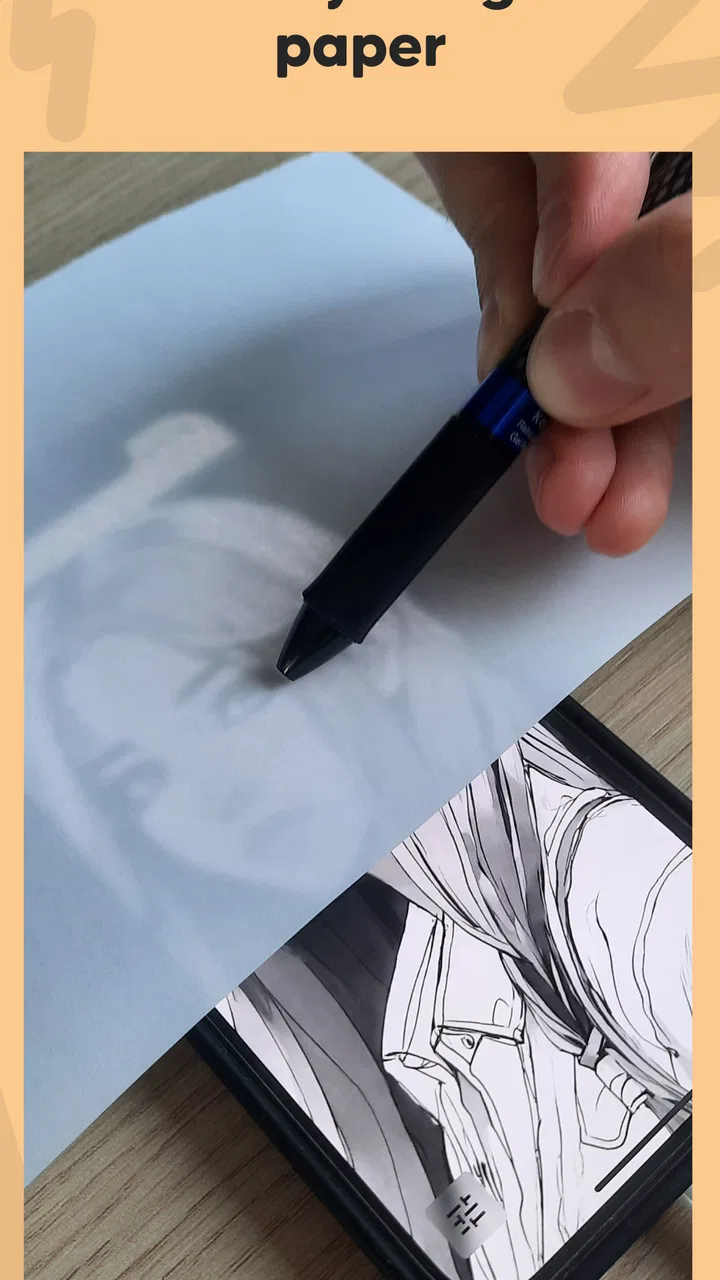
I found Lightbox draw - tracing paper most useful when I wanted to turn a phone into a quick drawing aid rather than a full digital art studio. The idea is simple: place an image on the phone screen, put real paper over it, and trace the visible lines. That makes the app especially approachable for beginners, children, hobby artists, and anyone who prefers pencil or pen on paper but needs help with proportions.
What surprised me is how much the experience depends on the physical setup around the app. The screen is only one part of the process. Brightness, paper thickness, hand position, the stability of the phone, and the surrounding light all affect the result. When those details are handled well, the app feels practical and direct. When they are ignored, tracing becomes awkward very quickly.
Developed by Try the Colors s.r.o., this free Art & Design app has a 4.2 average from around 3.1 thousand ratings and more than 500 thousand installs. It is suitable for Everyone, runs on Android 7.0 or later, and is currently at version 1.0.38. There are optional in-app purchases ranging from $4.99 to $29.99 per item, so I would approach it as a free starting point while paying attention to which parts of the experience require payment.
You May Also Like

 Blood Strike: 2.5 Anniversary
Blood Strike’s Loadouts Turn Every Drop Into a Tactical Gamble
A close look at Blood Strike’s custom loadouts: how fast access to signature weapons reshapes its battle royale rhythm, rewards preparation, and narrows the gap between fights.

 Pandora - Music & Podcasts
Pandora’s Music Is Easy to Start, but Harder to Recover
Pandora’s strength is its low-effort path from a seed to a station. Its weak spot is how much confidence it asks you to place in connection, setup, and quiet recovery.

 8 Ball Pool
 Is Built on Rivalries, Rematches, and Routine
A close look at the rivalries, rematches, shared routines, and unanswered safety questions that turn a quick pool match into a persistent mobile community.

 Samsung Music
’s Quiet Strength Is Playing What You Already Own
Its reach comes less from spectacle than from dependable access to a personal library. That simplicity is both the app’s strongest retention engine and its ceiling.

 AccuWeather: Weather Radar
AccuWeather Review: A Quick, Clear Forecast for Everyday Decisions
For everyday plans, the best forecast is the one you can understand quickly. AccuWeather makes rain timing, radar, and local conditions easy to act on, with a few trade-offs.

 Hill Climb Racing
Why Hill Climb Racing Still Turns Crashes Into One More Run
A tiny car, a bumpy hill and one more upgrade: Hill Climb Racing keeps resurfacing because its simple chaos makes every near-miss feel personal.
More From Our News Desk



How the tracing experience changes with connectivity and location
I find the most reliable way to use this tracing workflow is to separate choosing the reference from actually drawing: get the image ready where your connection is dependable, then settle in at a stable surface. Once the paper is over the screen, location matters less than lighting, battery, and keeping the phone still. That distinction helps me decide what to prepare before taking the app away from home.
The useful part happens on the desk, not in the cloud
The central workflow is physical. I choose an image, position it on the screen, place paper over the display, and trace. That is very different from drawing in a conventional mobile art app, where the phone itself is the canvas and every mark is created with a finger or stylus. Here, the phone acts more like a compact illuminated reference surface.
That distinction matters when thinking about connectivity. Any moment involving image selection, loading, or other app content may be affected by the quality of the connection available at that time. Once I am actually tracing, however, the important factors are usually local and physical: whether the image is already visible, whether the screen stays awake, and whether the phone remains in the right position. I would not plan a complicated project around an assumption that every part of the app behaves identically without a network connection.
For that reason, I prepare before starting. I select the picture while I have a reliable connection, check that it appears correctly, and only then arrange the paper and lighting. This avoids the most frustrating kind of interruption: getting comfortable at the desk and discovering that the image still needs to load or be adjusted.
A realistic everyday use case
Imagine a child asking for help drawing a favorite animal on a rainy afternoon. Instead of opening a complicated illustration program, I can place the phone on a table, choose a suitable image, cover the display with a sheet of paper, and let the child follow the outlines. The activity remains hands-on, and the result belongs to the child because it is drawn with a real pencil or marker.
The same workflow works for a greeting card, a simple decoration, a classroom craft, or transferring a rough reference onto paper. I would use it for line art, silhouettes, lettering practice, and basic shapes. I would not treat it as a replacement for learning observation or proportion. It helps with the initial structure, but the user still has to decide how firmly to draw, which details to keep, and how to finish the piece afterward.
Why the phone’s physical position matters
A phone is much smaller than a traditional lightbox, so the working area is limited. That makes the app convenient for small sketches but less suitable for large illustrations. I get better results when the paper is not sliding and the device is not being held in one hand. A stable, flat arrangement leaves both hands available: one to keep the paper in place and the other to trace.
There is also a trade-off between visibility and comfort. A brighter display makes the image easier to see through paper, but staring at a bright screen in a dark room is unpleasant. A well-lit room can make the paper comfortable to work on, yet too much ambient light reduces the contrast between the image and the sheet. I prefer even room lighting and a modestly bright screen rather than relying on maximum brightness all the time.
What happens when the connection is unreliable
Connectivity becomes most noticeable before the physical tracing begins. If I am working somewhere with weak service, I avoid changing images repeatedly or starting with a last-minute search. A better routine is to prepare the reference first, confirm that it is displayed, and then move the phone into its tracing position.
This is also where the app differs from a printed reference. A printed picture is ready as soon as it is in my hand, while a phone-based workflow can include loading or refreshing steps. The convenience is that the phone is already a familiar device and takes up little space. The disadvantage is that the preparation stage may be more sensitive to connectivity than a sheet of paper.
I would especially keep this in mind for travel, outdoor activities, waiting rooms, or school projects where the available network can change. If the drawing session matters, I would not begin by assuming that a connection problem will be harmless. I would prepare the image and setup before leaving a dependable network.
Using it in mobile situations
The app is mobile in the sense that a phone is easy to carry, but tracing itself is not a good one-handed activity. It needs a reasonably steady surface and a paper size that matches the display. On a train or bus, movement makes accurate lines difficult. In a café, the table may be too small or the lighting may produce reflections. At a park, dust, wind, and uneven surfaces add their own problems.
My preferred mobile use is to carry the phone to a destination and do the actual drawing once I find a stable table. That makes it more portable than a dedicated lightbox while avoiding the unrealistic expectation that it should work like a camera or note-taking app anywhere. The phone travels easily; the tracing setup still needs a little planning.
For children, I would set everything up before handing it over. This reduces the temptation to press around on the screen while the paper is in place. It also helps prevent the image from shifting at the exact moment the child starts drawing. A short preparation routine makes the experience calmer and protects the quality of the outline.
Recovering from common interruptions
The most useful recovery habit is to separate image preparation from tracing. If the image changes while the paper is already positioned, the outline can move and the whole drawing may become misaligned. I therefore make the major adjustments first: choose the reference, check its placement, and decide which portion of the image belongs on the paper.
If the phone moves, I do not try to continue from memory. I pause, realign the paper with the visible image, and reinforce only the lines that are still clear. For a simple sketch, this is manageable. For a detailed drawing, I would rather restart the alignment early than discover near the end that the head, lettering, or border has drifted.
Screen interruptions are another practical concern. Notifications, accidental touches, or the display dimming can break concentration. I keep the device on a stable surface and avoid touching it once the paper is ready. If the screen goes dark, I first restore the display carefully, then check the image position before continuing. The recovery step is small, but skipping that check can create duplicated or offset lines.
Being careful with battery and data
Because the screen is the working surface, battery use deserves attention. A bright display held on for a long drawing session can be more demanding than a quick reference check. I would begin with enough charge for the full activity, reduce nearby distractions, and avoid treating the phone as a temporary lightbox while also running several unrelated tasks.
Data-conscious use is mostly about preparation. If I am on mobile data, I would avoid repeatedly reloading images or experimenting with many references during the session. Choosing the image beforehand and keeping the tracing stage focused is both more economical and less distracting. It also makes the app feel more like a tool than a browsing activity.
I would not confuse data saving with guaranteed independence from connectivity. The sensible approach is to test the exact workflow in advance, especially before using it away from home. If the app opens the image and remains usable in the intended setting, the session should be straightforward; if not, a printed reference or a dedicated physical lightbox is the safer backup.
How it compares with ordinary alternatives
Compared with drawing directly in a digital art app, this approach feels more natural for people who like paper texture, pencil pressure, and physical materials. Digital drawing offers undo, layers, brushes, and easy editing, while this app gives me a faster bridge from a reference image to a hand-drawn outline. If my goal is a polished digital illustration, I would choose a proper drawing application instead.
Compared with printing an image, the phone is quicker for spontaneous projects and avoids needing a printer. It is also easier to change the reference at the preparation stage. Printing wins when I need a fixed image that will not dim, shift, or depend on the phone staying active. For repeated tracing sessions, a printed template may be less tiring.
Compared with a dedicated lightbox, the phone is cheaper to try and far easier to carry. A real lightbox generally offers a larger, more consistent working area, which matters for serious craft work, pattern transfer, or long sessions. I see this app as a convenient entry point and occasional tool, not as a full substitute for specialized equipment.
Who will enjoy it, and who should skip it
I would recommend it to beginners who feel blocked by proportions, parents looking for a simple creative activity, hobbyists making small paper projects, and anyone who wants to trace a reference without buying extra hardware. It is also useful for testing whether this kind of workflow suits you before investing in a larger lightbox.
I would skip it if I mainly want advanced digital painting controls, large-format work, professional archival output, or a drawing experience that is completely independent of physical setup. People who dislike holding paper against a screen may also find the process more fiddly than expected. The app simplifies the first outline, but it does not remove the need for patience or a stable workspace.
The free entry point makes experimenting easy, while the optional purchases mean I would review the available choices before assuming every tool or resource is included. I would start with a small, low-stakes drawing rather than paying immediately. That first test reveals whether the screen size, image handling, and physical arrangement fit the way I like to work.
My final view after using the workflow
Lightbox draw - tracing paper is at its best when I treat it as a focused bridge between a phone image and real paper. Its strongest quality is accessibility: I can understand the purpose immediately, and a beginner can produce a recognizable outline without learning a complex interface. The result still feels handmade, which is the main reason I would choose it over a standard digital art app.
Its limitations are equally clear. The phone’s small display restricts the drawing area, the setup needs to stay stable, and connectivity can matter during preparation even though the tracing itself is mainly a physical activity. Brightness, battery, notifications, and room lighting all influence the session. These are not deal-breakers, but they mean the app rewards a little planning.
With its Everyone age rating, Android 7.0 minimum, free starting price, and current version 1.0.38, it is an approachable option for casual creative use. I would recommend testing it with a simple outline first, preparing the image before arranging the paper, and keeping a printed reference available for important projects. My verdict is positive for small, practical tracing tasks, but not for users seeking a complete digital studio or a replacement for a full-size lightbox.
FAQs for Lightbox draw - tracing paper
01What is Lightbox Draw - Tracing Paper, and how does it work?
Lightbox Draw - Tracing Paper is an innovative app designed to assist artists and hobbyists in tracing images with ease. By utilizing your device’s screen as a lightbox, it allows you to place a piece of paper over it and trace the displayed image. This is perfect for artists who want to replicate or practice drawing intricate designs without the need for additional equipment.
02Can I use Lightbox Draw on both Android and iOS devices?
Yes, Lightbox Draw - Tracing Paper is available for both Android and iOS platforms. You can download it from the Google Play Store for Android devices and the Apple App Store for iOS devices. This cross-platform availability ensures that users can enjoy the app’s features regardless of their preferred device type.
03Does Lightbox Draw require any special permissions to function properly?
Lightbox Draw requires minimal permissions to function effectively. Primarily, it needs access to your device's storage to allow you to upload images that you wish to trace. Additionally, it may request permission to access your device’s screen brightness settings to optimize the tracing experience. These permissions are standard for apps of this nature.
04Are there any in-app purchases or ads in Lightbox Draw?
Lightbox Draw offers a free version with basic features and may include ads to support the developers. For users seeking an ad-free experience and additional advanced features, an optional in-app purchase is available. This premium version unlocks enhanced tools and functionalities, providing a more comprehensive tracing experience.
05What kind of images can I trace using Lightbox Draw?
With Lightbox Draw, you can trace a wide variety of images, including photos, sketches, and digital art. The app allows you to upload images from your device or select from its built-in library. This versatility makes it suitable for artists of all levels who wish to practice or create detailed drawings using different types of reference images.
Pros
- Intuitive interface for easy navigation.
- Wide variety of drawing tools available.
- Supports multiple image formats.
- Adjustable transparency for accurate tracing.
- Lightweight and fast performance.
Cons
- Limited features in free version.
- No layer support for complex drawings.
- Occasional ads disrupt workflow.
- Requires internet for some features.
- Lacks advanced editing options.

Lightbox draw - tracing paper
Gallery